


If you are considering dental implants, you should know what happens during implant placement and how painful it will be. Many Hagerstown residents have the same questions as you do!
This blog aims to provide simple answers to your questions: what an implant is, step-by-step instructions for the placement process, and how long it takes to place an implant.
What Is a Dental Implant, Really?
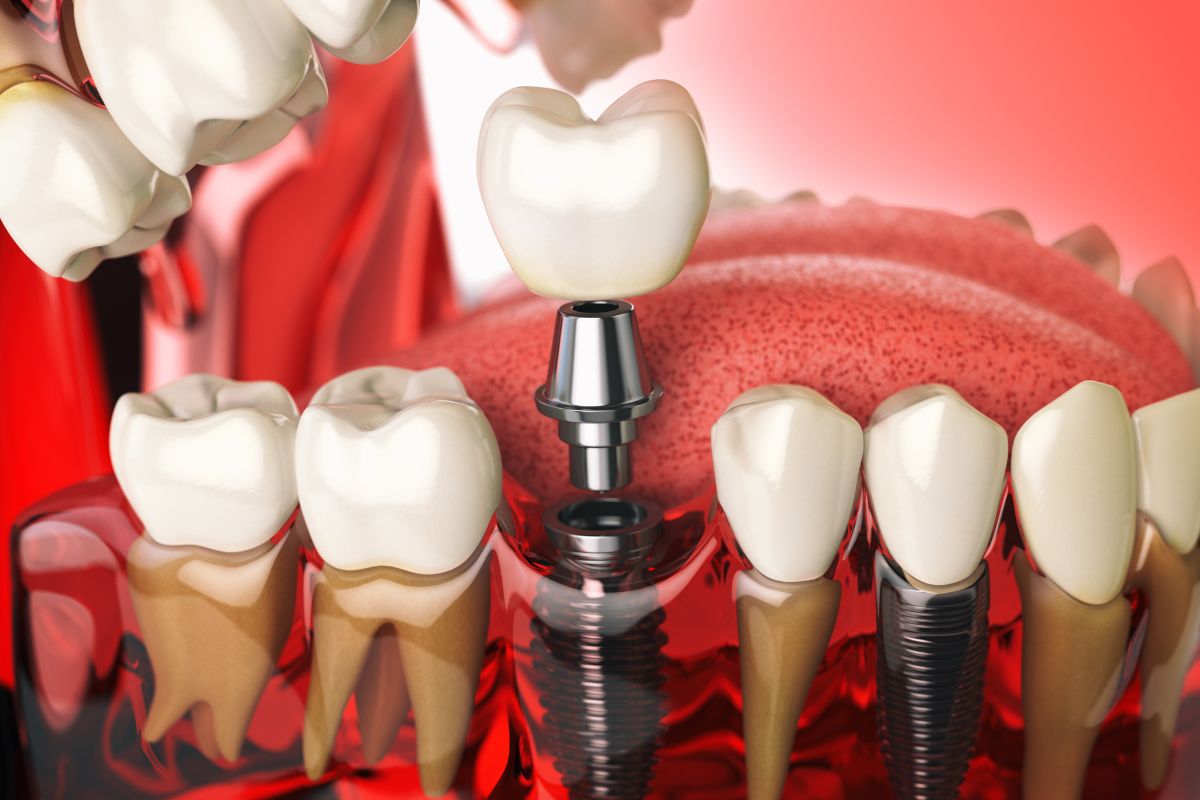
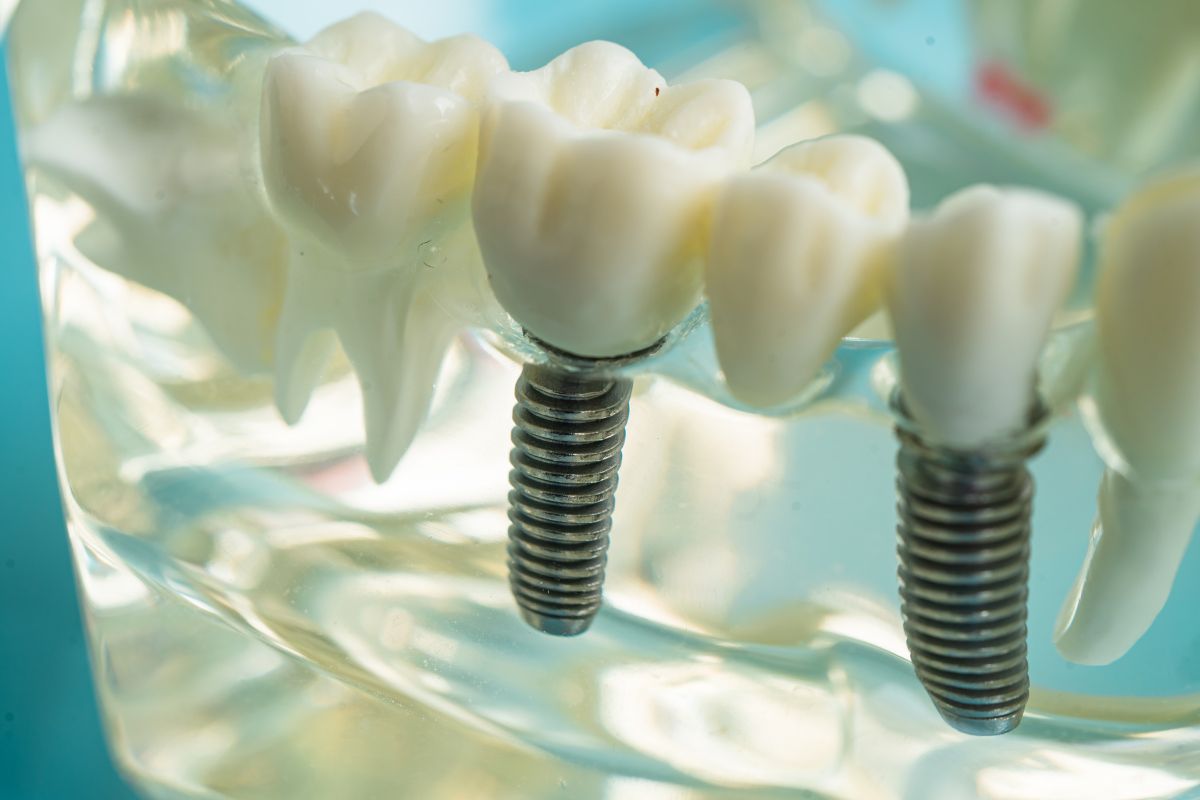
A dental implant is a small titanium post placed into your jawbone. It acts as an artificial root for a replacement tooth. Once the implant fuses with the jawbone, the dental crown (which looks and functions like a natural tooth) will be placed on top of the implant.
Unlike dentures or partial dentures, which can be removed from your mouth, dental implants remain permanently fixed to the bone. Dental implants do not move or shift when eating or speaking.
According to the American Dental Association (ADA), dental implants have a 95% or higher success rate when placed correctly and properly maintained afterward.
Step-by-Step: The Dental Implant Procedure
Step 1: Initial Consultation and Evaluation

To determine if you are a good candidate for dental implants, your dentist will need to conduct an evaluation. This evaluation will include the following components:
- Your dentist will take x-rays or perform 3D scans of your jaw to assess the condition of your bone. This will determine how much bone you have, whether it is healthy enough to support the implants, and whether any additional procedures will be needed.
- A review of your medical history to identify any pre-existing medical conditions.
- A review of your gum conditions, most importantly to identify whether there is an active gum disease, which needs to be treated before placing an implant.
Depending on these factors, your dentist will determine whether you are a suitable candidate for dental implants. You may not be considered a good candidate if you have insufficient bone in your jaw; however, a bone graft could allow you to have enough bone to support the implants.
Step 2: Bone Grafting (If Needed)
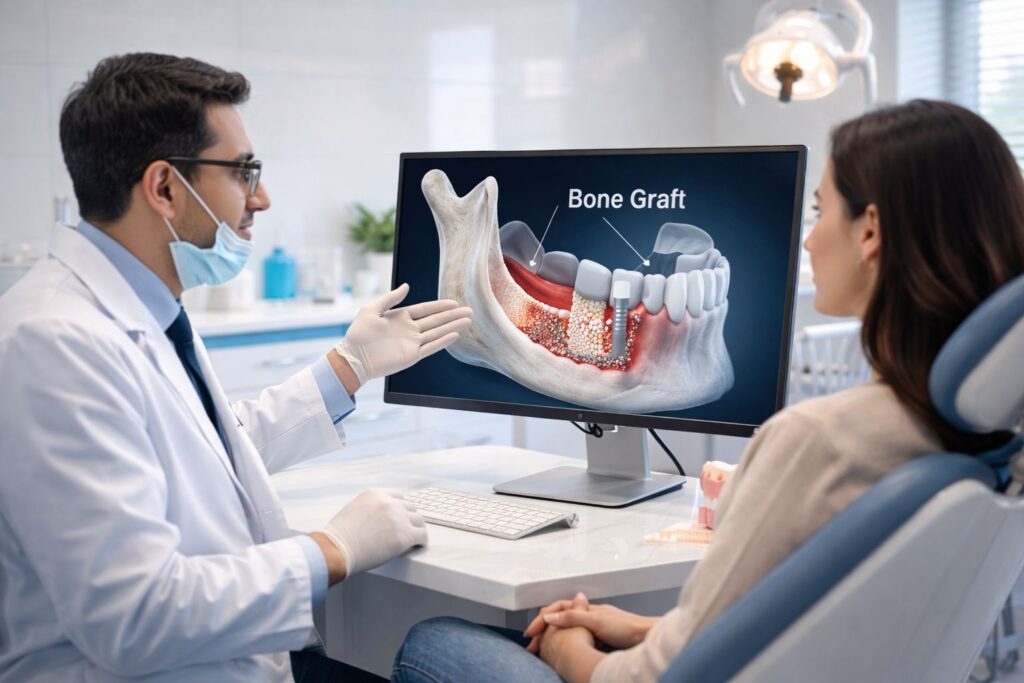
If the jawbone quality or volume is insufficient to support an implant, a grafting procedure will be required. The graft itself will either come from the patient’s own body or from another source (donor). The graft will take time to heal and integrate into the existing bone before proceeding to the next step. Healing time can take anywhere from three to six months; while that may seem long, the success of the implant is worth it.
Not every patient requires a bone graft; many can proceed directly to the next step in the dental implant process.
Step 3: Implant Placement
The actual dental implant placement process is performed under local anesthesia. A small incision in the gingiva is made, and a precise preparation (drilling) is made to create a pocket in the bone into which the titanium post is placed. Once the titanium post is placed, the incision is stitched, and healing begins.
Most patients report mild discomfort for only a few days, which can be managed with over-the-counter medication. Severe pain is not expected.
Step 4: Osseointegration — The Healing Phase
This is the longest phase of the process, during which the implant fuses with the jawbone (osseointegration). Depending on the individual and their circumstances, osseointegration can take approximately three to six months or longer.
During osseointegration, the patient is provided with a temporary crown (to prevent a visible gap) and can continue to function normally, with dietary restrictions during the healing process.
Step 5: Abutment Placement
Once the implant is fully integrated, a small connector piece called an abutment is attached to it. This is a minor procedure, often done under local anesthesia.
The abutment holds the final crown in place. Your gum tissue is allowed to heal around it for a couple of weeks.
Step 6: Crown Placement
The final step. A custom-made crown matched to the color and shape of your natural teeth is attached to the abutment. Your dentist checks the fit, your bite alignment, and makes any adjustments.
At this point, the process is complete. The result is a tooth that looks natural, withstands normal chewing, and requires no special maintenance beyond regular brushing and flossing.
What Is the Timeline of the Implant Process?
Every patient’s treatment can take 3 months to over a year to complete; the total length is influenced by the following:
- Whether grafting is required
- How quickly you heal
- How many implants are placed
For straightforward cases, the overall process will take less time than for complex cases, but it will be worth the wait!
Who Is Suitable for Dental Implants?
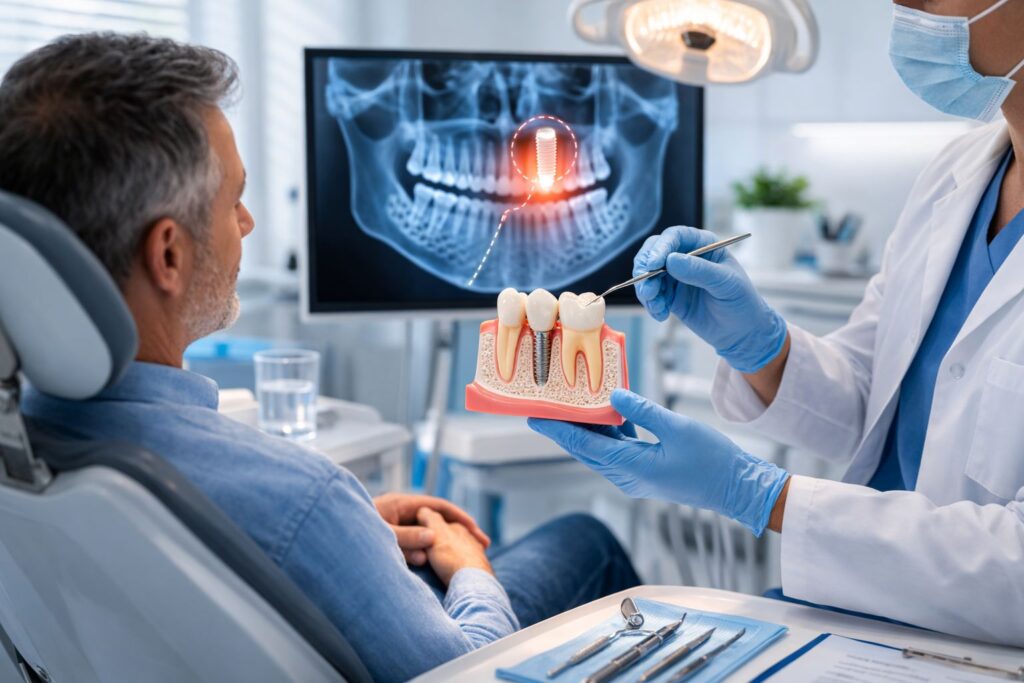
Most healthy adults who have lost one or more teeth are candidates. You should consider yourself a good candidate if you meet the following criteria:
- You have enough bone in your jaw to support dental implants.
- You do not have uncontrolled diabetes or other medical conditions that can affect the healing of your implant.
- You do not smoke heavily (smoking significantly decreases your chances of success).
- Your gum tissue is healthy.
Dental implants are a common recommendation for patients in their 40s, 50s, or 60s who have had teeth removed due to decay, injury, or extraction, rather than using dentures or bridges to restore long-term functionality.
Aftercare: What to Do Post-Procedure
After each stage of the implant process, you must do the following:
- Eat soft food like yogurt, soup, and eggs for several days
- Not smoking, as it will inhibit your healing and increase the risk of failure
- Keep your mouth clean; your dentist will give you instructions on rinsing after each stage
- Keep all follow-up appointments with your dentist.
In general, you should care for your dental implants as you would your natural teeth—brush and floss twice daily, return regularly to your dentist for check-ups, and follow the recommended care instructions. The NIH reports that implants placed with proper technique and properly maintained can function for 20+ years.
Making the Right Call for Your Oral Health
Replacing a missing tooth isn’t just about appearance. Gaps in your teeth cause bone loss over time, shift neighboring teeth, and can affect how you chew and speak. Implants address all of that. They’re the closest thing to a natural tooth that modern dentistry offers.
If you’re in Hagerstown or nearby areas and want to determine whether you’re a good candidate, the next best step is a consultation. Our dentist can evaluate your bone structure, gum health, and overall oral health — and walk you through exactly what your process would look like.
Ready to Take the Next Step? Let’s Talk.
At Hagerstown Family Dental, our team serves patients across Hagerstown, MD, and the surrounding Washington County area. Whether you have questions about implants or want to schedule a consultation, the team is here to help — no pressure, just honest guidance.
Common Questions Most People Have
1. Is the dental implant procedure painful?
The procedure is done under local anesthesia, so you won’t feel pain during placement. Mild soreness after is common and usually resolves within a few days with basic pain relief.
2. How long do dental implants last?
With proper care, implants can last 20 years or more. The crown may need to be replaced after 10–15 years due to wear, but the implant itself is long-lasting.
3. Can I get an implant if I’ve had a tooth extracted recently?
Yes, in some cases. Immediate implant placement after extraction is possible, but it depends on the bone condition and gum health. Your dentist will evaluate the site before making a decision.
4. Will my insurance cover dental implants?
Coverage varies. Many plans consider implants cosmetic and don’t cover them. However, some policies cover portions of the procedure. It’s best to check with your insurance provider directly.